ergonomic retrofits with portable gantry crane lifting heavy machinery

How to Retrofit Your Facility for Ergonomics Without Major Downtime

Facilities that rely on manual lifting, inefficient layouts, and poorly designed workstations experience higher injury rates, decreased productivity, and increasing workforce challenges. Many organizations hesitate to implement ergonomic improvements because of the outdated belief that such changes require major construction or extended shutdowns. However, facility operators know that ergonomics is a critical requirement for promoting safe industrial environments.  

Ergonomics Starts with How Work Is Performed

Most ergonomic problems stem from a few consistent operational issues:

  • Manual lifting and repositioning of loads
  • Poor workstation height and layout
  • Inefficient movement of materials
  • Congested or poorly defined work zones
These challenges cannot be solved through training or policy alone. They require engineered solutions that change the way work is physically performed. Facilities that invest in ergonomic equipment typically see lower injury rates, higher throughput, reduced fatigue, improved employee retention, and stronger compliance with safety standards.

Begin with a Targeted Operational Review

Successful ergonomic retrofits start with identifying where physical stress and workflow inefficiencies intersect. High-impact opportunities are usually found in tasks involving:

  • Repetitive bending, twisting, or reaching
  • Manual lifting of pallets, containers, or components
  • Long-distance pushing or pulling
  • Inconsistent work heights
  • Crowded production or staging areas
Operator and supervisor input is essential. These teams understand where fatigue builds up and where equipment can deliver the greatest return in both safety and productivity. Once these areas are identified, equipment selection becomes a strategic decision, not a reactive purchase.

Equipment Solutions That Deliver Ergonomic Performance

Jarvis provides material handling and workspace systems designed to reduce physical effort while improving operational flow.

Lift Tables and Tilters

Lift tables and tilters address one of the most common ergonomic risks: bending and reaching to access loads. These systems position materials at optimal working height and angle, allowing operators to maintain neutral posture. They support ergonomic performance by reducing back and shoulder strain, improving accuracy and consistency, increasing workstation productivity, and supporting repetitive tasks without fatigue
Lift tables and tilters are widely used in assembly, palletizing, packaging, and manufacturing environments where load height varies throughout the process.

Overhead Cranes and Hoists

Manual handling of heavy or awkward loads remains one of the leading causes of workplace injuries. Overhead cranes and hoists remove that risk by transferring the lifting function from employees to mechanical systems. Workstation cranes, jib cranes, and hoist systems can be installed on existing structures or as freestanding units with minimal layout changes. These systems are particularly effective in machining operations, fabrication areas, maintenance zones, and shipping and receiving areas. By eliminating manual lifting, facilities gain both safety and speed while reducing long-term injury exposure.

Mezzanines and Modular Offices

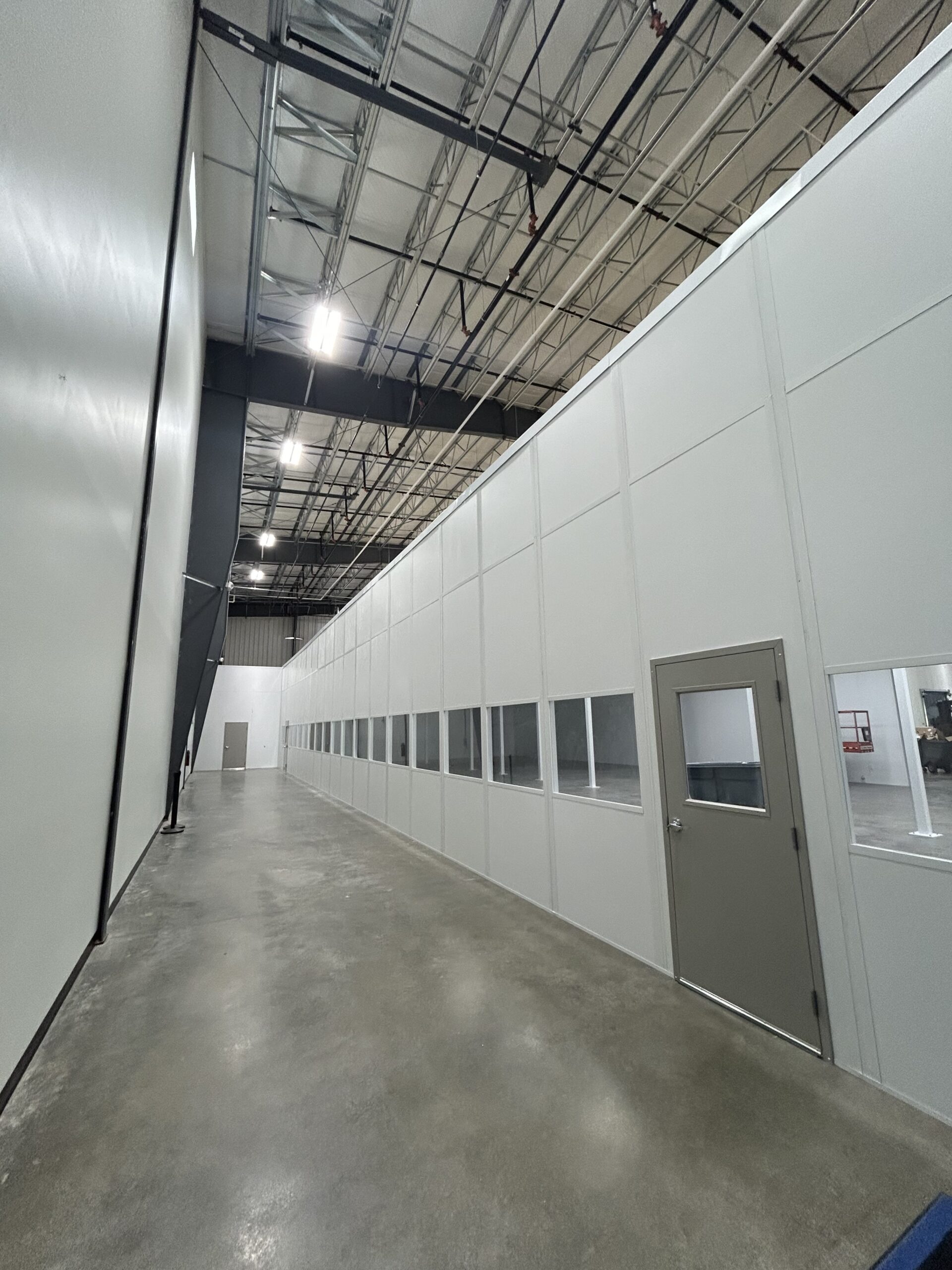
Ergonomics extends beyond lifting and includes how space is organized. Poor layout design creates congestion, excessive walking, and unnecessary exposure to noise and temperature extremes. Mezzanines and modular offices allow facilities to create structured work areas without major construction. These systems improve ergonomics by separating office and production functions, reducing floor congestion, improving visibility and supervision, and creating controlled environments for administrative and quality teams.

Ergonomic Carts and Handling Equipment

Outdated carts and transport tools often require excessive force to move materials, increasing fatigue and injury risk. Modern ergonomic carts and handling equipment are designed for controlled movement and maneuverability.

Implementing Improvements Without Downtime

One of the key advantages of equipment-based ergonomic retrofits is that they can be implemented without interrupting operations. Modular designs enable phased installations, off-hours implementation, incremental upgrades, and minimal disruption to production. Projects can be coordinated around operational schedules, ensuring that installations support productivity rather than hinder it. High-risk areas can be prioritized and addressed first, allowing solutions to gradually expand throughout the facility over time.

Key benefits include:

  • Lower absenteeism
  • Reduced workers’ compensation claims
  • Improved morale
  • Higher retention
  • Greater operational reliability
Ergonomic investment is a safety decision and a workforce strategy.

Frequently Asked Questions

1. Can ergonomic upgrades really be done without stopping production?
Yes. Most ergonomic retrofits use modular equipment that can be installed in phases or during off-hours. Lift tables, cranes, carts, and modular offices can be added with minimal layout disruption, allowing facilities to improve safety without shutting down operations.
The fastest improvements typically come from addressing manual lifting and workstation height. Installing lift tables, tilters, or ergonomic carts often delivers immediate reductions in strain and fatigue while improving productivity.
The best approach is to evaluate tasks where physical stress and inefficiency overlap—such as repetitive lifting, material transport, or congested work areas. Solutions should be selected based on workflow, safety requirements, space constraints, budget, and long-term operational goals rather than a single product type. Lorem ipsum dolor sit amet, consectetur adipiscing elit. Ut elit tellus, luctus nec ullamcorper mattis, pulvinar dapibus leo.

Ergonomics Drives Performance

With the right equipment, facilities can eliminate unnecessary strain while improving workflow and space utilization without major downtime. At Jarvis Handling Equipment Co., we assist manufacturers and warehouse operators in enhancing safety and efficiency with practical equipment solutions that reduce physical strain without interrupting production.
Ready to eliminate strain, boost productivity, and implement critical safety improvements without stopping production?

Take the Next Step to a Safer, More Efficient

Contact Jarvis Handling Equipment Co. today for a personalized operational review. Discover the modular equipment solutions that will deliver immediate ergonomic performance and long-term workforce reliability for your manufacturing or warehouse environment.
Share this:

Allison Desrochers

Director of Marketing

Allison Desrochers joined Jarvis Handling as the Marketing Director in 2024, bringing a strong foundation in business development, marketing, and the supply chain industry. She holds a Bachelor of Science from Grand Valley State University and is skilled in communication and strategic marketing. At Jarvis, Allison plays a key role in advancing the company’s mission to provide businesses with efficient, reliable material handling and ergonomic solutions. Her work focuses on crafting marketing strategies that highlight Jarvis’s commitment to enhancing operational productivity, safety, and efficiency through high-quality products and tailored solutions.

Passionate about business and personal growth, Allison is dedicated to building strong, long-term relationships with clients and colleagues alike. She is focused on supporting Jarvis’s continued expansion by bringing creativity and innovation to the marketing efforts while ensuring that customer satisfaction and service excellence remain at the forefront of the company’s goals. Through her contributions, Allison helps strengthen Jarvis’s presence and impact in the industry as the company moves forward.

Paul Hart

Director of Sales and Business Development

Paul Hart is the Director of Sales and Business Development at Jarvis Handling, where he leads the company’s growth in modular and platform solutions. With over 14 years of experience in the construction and manufacturing sectors, Paul’s background includes roles in a large modular construction company and a foundation in a family-run construction business. Paul is also a veteran, having served in the army before transitioning into the construction industry.

Since joining Jarvis in 2022, Paul has played a key role in driving the company’s expansion, helping achieve its highest sales and revenue year in 2023. His expertise in product knowledge, design, and project management enables him to create innovative, cost-effective solutions for clients facing production and space challenges. Paul is passionate about building strong, long-term relationships with clients, ensuring that Jarvis continues to deliver value and stay ahead of industry trends.

Susan Smith

Owner & President

Susan Smith’s journey to owning Jarvis Handling began with a childhood dream of entrepreneurship and a background rooted in manufacturing. After working at a diecast manufacturing plant, where she assisted with operations and efficiency improvements, Susan went on to earn a degree in Finance while volunteering in her community. In 2004, she joined Jarvis Handling as an office clerk, quickly stepping up to manage the business. Her leadership helped the company weather a recession, and by 2014, Susan took the bold step of purchasing the business, officially becoming the owner in November of 2014.

As the owner of Jarvis Handling, Susan is dedicated to providing innovative solutions that improve her clients workplaces. Her mission is centered on delivering top-notch customer service and fostering strong partnerships with manufacturers to ensure successful outcomes for every project. A passionate advocate for women in a male-dominated industry, Susan is proud of how Jarvis Handling has grown under her leadership, overcoming challenges and adapting to an ever-evolving market.

Looking to the future, Susan’s vision is to continue building a team that is both talented and customer-focused, while growing the business in a way that stays ahead of industry trends. With a commitment to excellence and a customer-first mentality, Susan is shaping the future of Jarvis Handling while staying grounded in the company’s long-standing values.